Wild + Scenic Verde River Trip, January 2026
From January 17-21, 2026 I had the opportunity to kayak the “wild and scenic” section of Arizona’s Verde River (and then across Horseshoe Reservoir). I’ve put together this page to share some details and photos. (Depending on your device, all photos may be after all the text. )
I’ve wanted to make this trip for a long-time—to see and record along this rugged and inaccessible stretch of the Verde. Its beauty and challenges did not disappoint. An extraordinary few days.
The trip was organized as part of the US Forest Service’s Verde Ranger District’s “River Rangers” program. The program takes volunteers down the river corridor to assist in maintaining and managing the river—picking up trash, clearing hazards from the river channel, removing certain expansive plant species, etc.
“Wild and scenic” is a federal designation made under the 1968 Wild and Scenic Rivers Act. The Act was passed following a decades-long period of dam building in the United States that had compromised much of the ecological and environmental health of America’s rivers, especially related to their “free-flowing” nature. Ongoing release of municipal and industrial waste was also severely degrading water quality. The “wild and scenic” designation aims to preserve a river’s unique values, free-flowing quality, and preserve and enhance water quality.
In 1984, Congress named 40.5 miles of the Verde from above Beasley Flat river access point to the confluence of Red Creek in the Mazatzal Wilderness as wild or scenic. (We’re currently working to get the Upper Verde from Granite Creek to the confluence with Sycamore Creek also designated. Verde tributary Fossil Creek is currently the only other wild and scenic section in Arizona’s river system.).
Today, the Verde River (its full 190+ miles) is the last free-flowing river in Arizona. With its watershed larger than the state of Connecticut, it is a truly special place. Please take some time to learn more about the Verde’s critical and unique values here.
The wild and scenic section of the Verde twists and turns its way through three national forests—Prescott, Coconino, and Tonto—and through or adjacent to the Mazatzal and Cedar Bench Wildernesses. Wilderness, by the way, is a separate federal designation under the 1964 Wilderness Act “based on the interaction of (1) biophysical environments primarily free from modern human manipulation and impact, (2) personal experiences in natural environments relatively free from the encumbrances and signs of modern society, and (3) symbolic meanings of humility, restraint, and interdependence that inspire human connection with nature.” In short, the area is rugged and remote.
As far as boating goes, the Verde may not look like much in comparison to other “great” rivers on paper but, in addition to its stunning wild beauty and wildlife, it is a demanding and technical paddle. It offers up to Class IV and many Class III rapids, constant whitewater, and an inexhaustible supply of other hazards, such as trees, rocks, and phragmites (a giant reed that can grown in dense, impenetrable thickets).
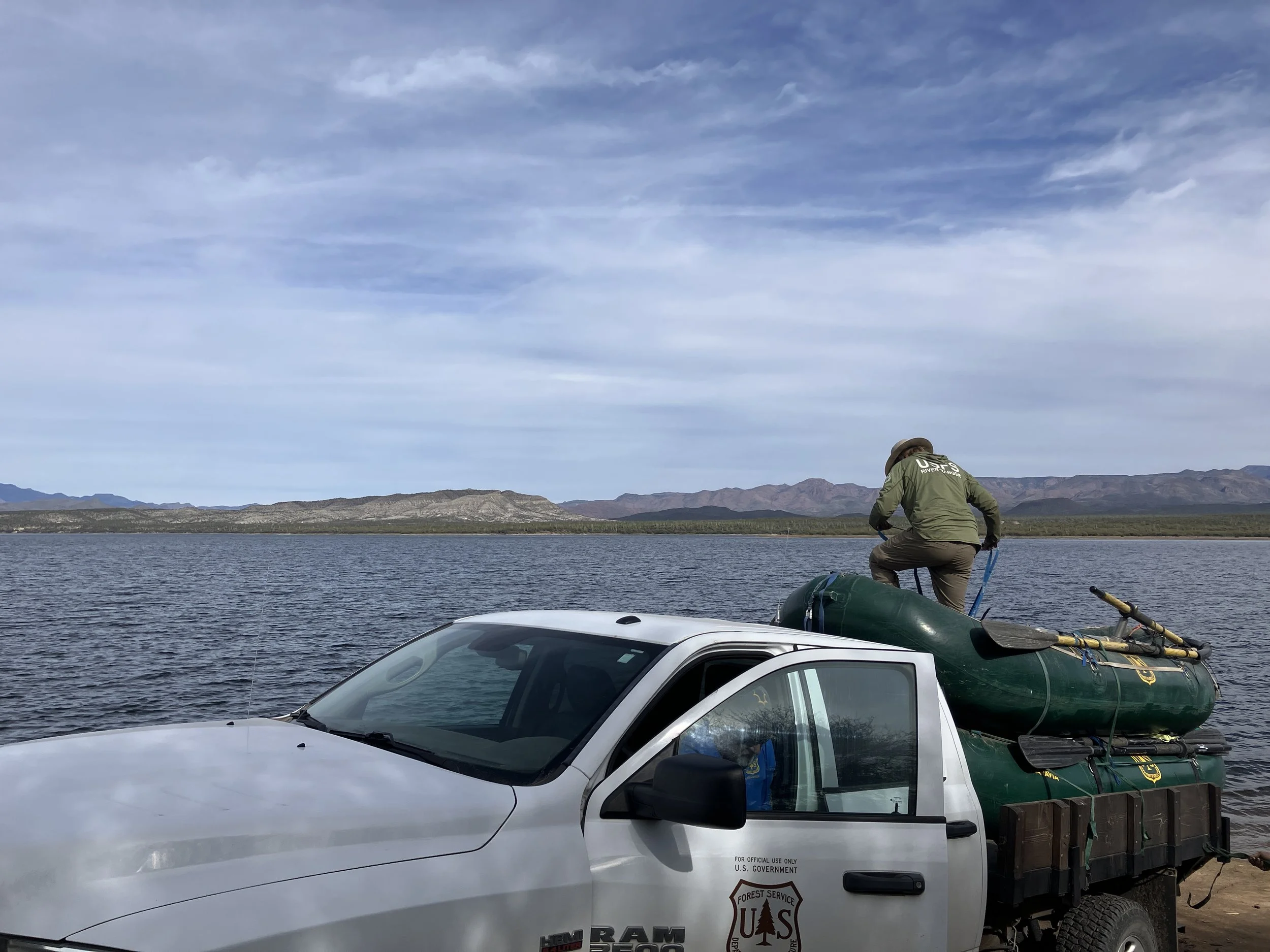
Our trip put in at Childs river access point (mile 17 of the wild and scenic section) and took out at Horseshoe Reservoir (~6 miles past the end of the W+S boundary). About 42.5 miles in total. There were 6 in our party—three folks from the US Forest Service and two other volunteers. Each packed in and carried all their own supplies and of course paddled their own boat. Two from the Forest Service were in larger pack rafts; I was in an inflatable Tomcat “duckie.”
As a novice/intermediate kayaker, I knew I was in for a challenge and I was certainly pushed to my physical limits. Less difficult than the whitewater was negotiating the Verde’s endless twists and turns and visible and hidden tree hazards; and dealing with the phragmites (“phrags”). There were sections that had (to me, at least) a kind of “heart of darkness” quality—narrow, shadowy, swift moving corridors with dense tree overhangs to the right, and phrag thickets to the left. We also passed through several “phrag tunnels”—these are parts of the channel with high phrag on both sides you paddle and turn blindly through. Very cool but also a bit unnerving.
But, of course, there were long stretches that you could lean back and really appreciate the magnificence of the. Verde and its riparian forest.
In all, I flipped my kayak 3 times during the trip. And honestly there were many more times that I’m pretty sure I was out of the boat and don’t know how I didn’t swim! Each of the three swims was related to a tree or phrag. It was only during the third swim (end of day 4) that I got myself in a bad spot—got caught in a current and slammed into the bank and then into a tree extended across the channel. The boat got pinned up on the tree and I got caught under the boat. But fortunately I quickly got flushed out, swam to ground, and then joined the others in their attempts to extract my boat from the tree—it took 4 of us pulling a throw line attached to a D-ring on the bottom of the boat to get, if that gives you a sense of the strength of the current.
Overall, I felt good about I did paddling and maneuvering these 40+ miles. The group was SO supportive and helpful along the way. I really cannot say how grateful to and admiring I am of them. My experience of, appreciation for, and knowledge about the river and kayaking grew exponentially, and I could feel myself improving everyday.
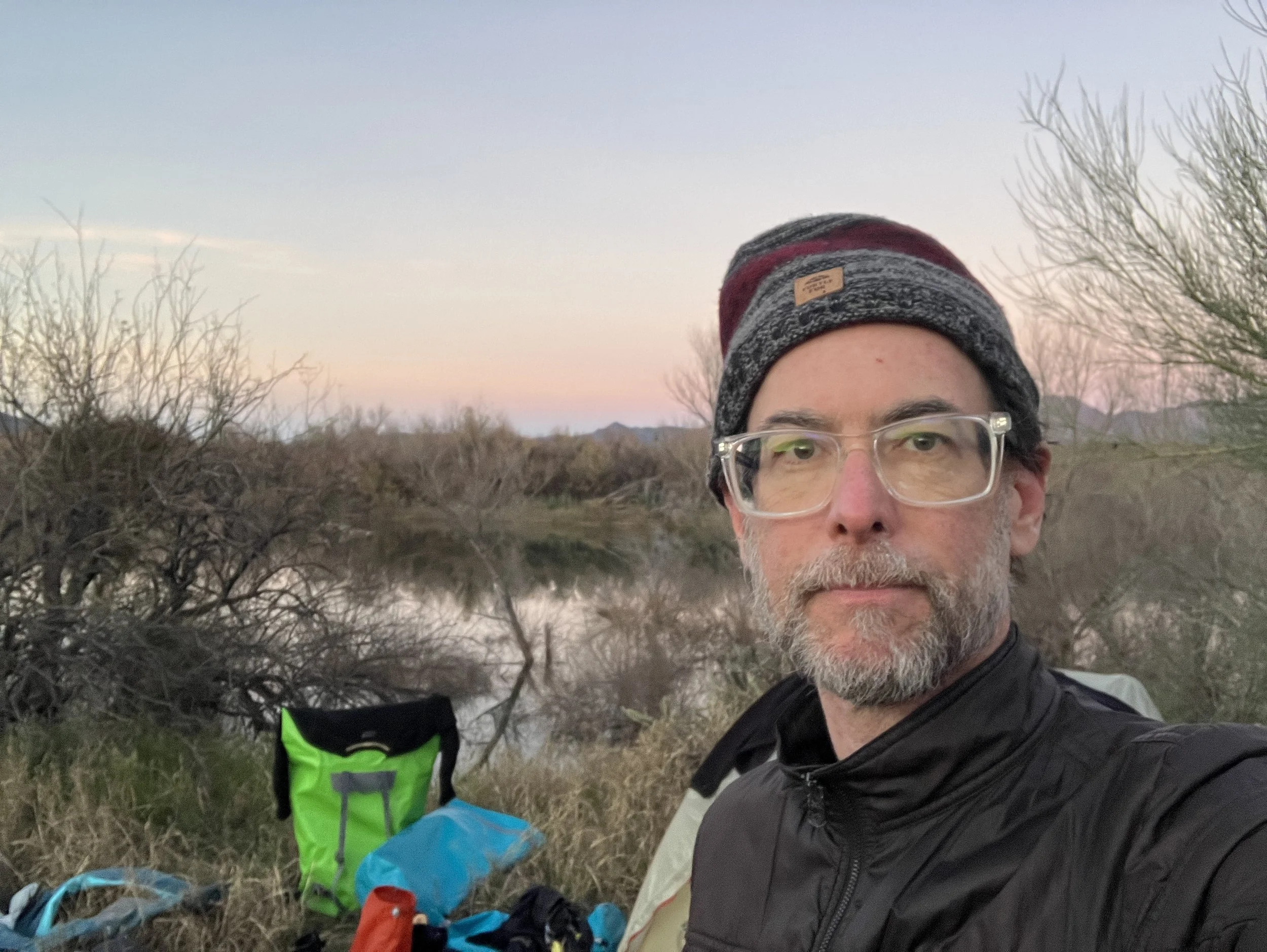
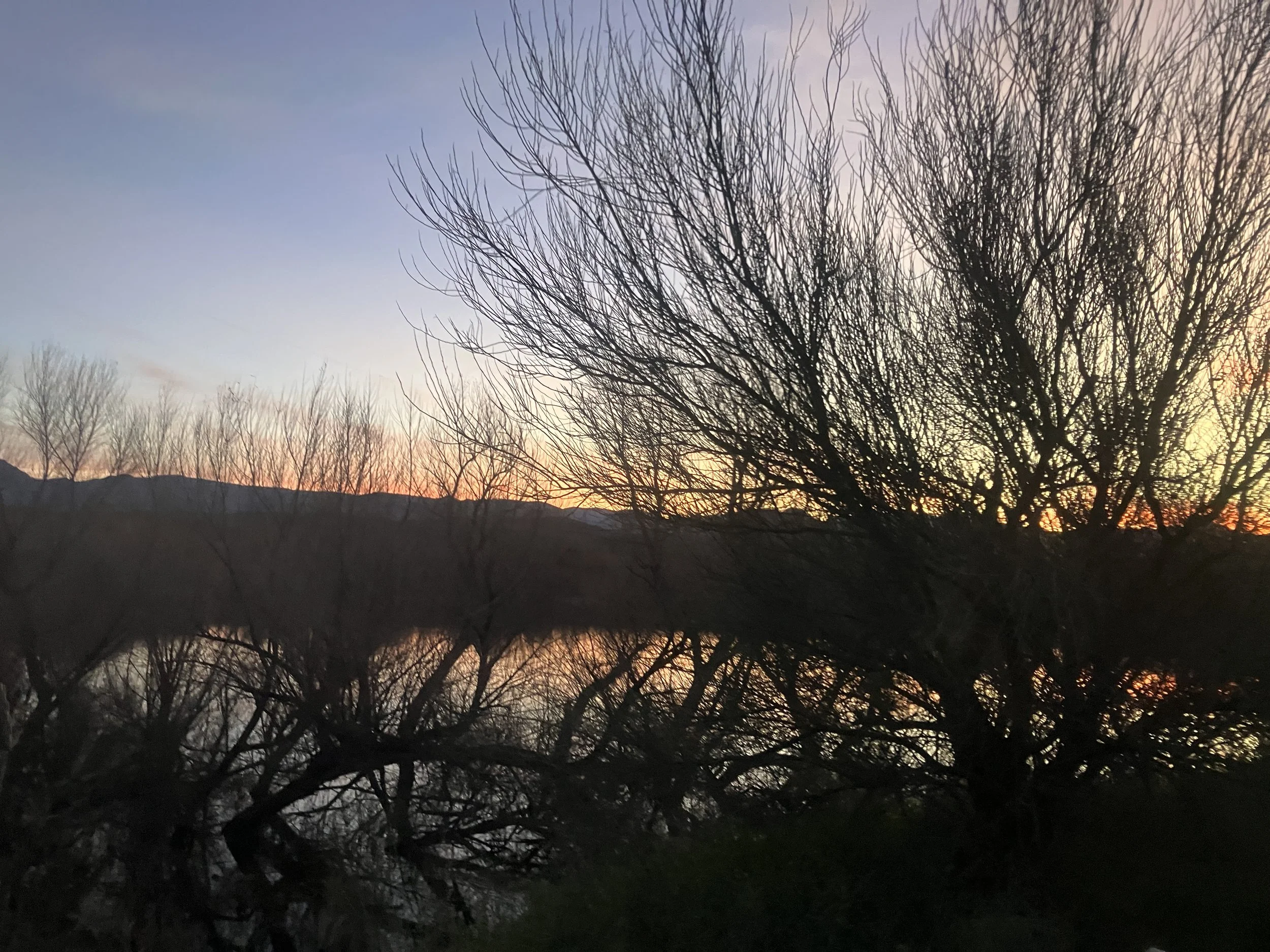
At the end of 9-11 mile days, we would find a campsite and settle in for the night. Typically, we would gather around 6 pm: cook, eat and talk fireside, and then retire to sleep in our tents between 8 and 9 pm. We’d be up in the darkness the next morning, getting back on the river by 8 or 8:30 am. Conversation was fun—interesting to think about the challenges and questions that surround “managing” a “wild” river and hear stories of others’ adventures on the water.
In the main, the weather was good. No rain. Good river levels and flow (280-400 cfs). In the 60s during the day and not too cold overnight, maybe high 20s or low 40s. The last night was the coldest and we awoke to a thick frost covering us.
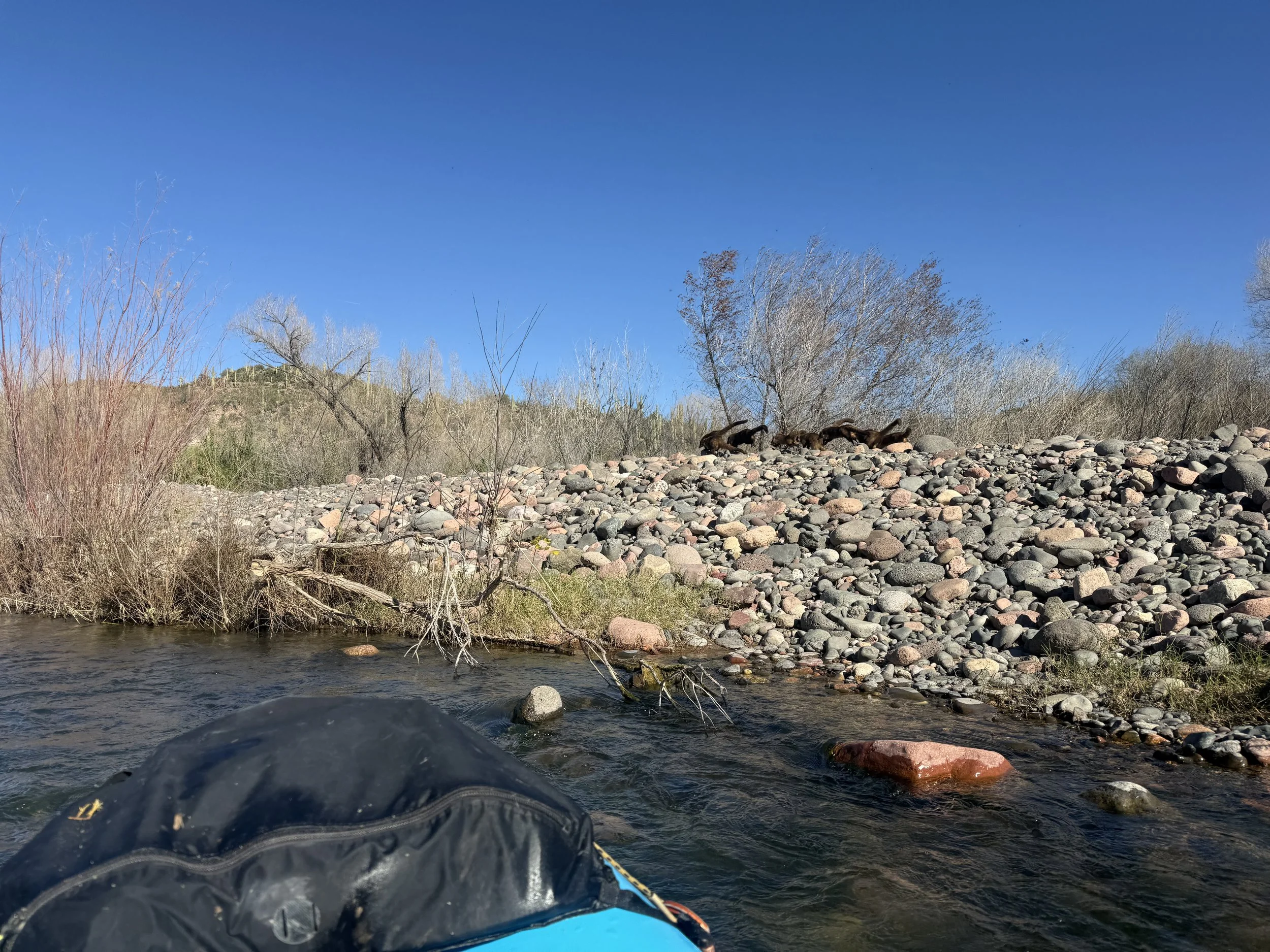
Wildlife. No doubt the wildlife sighting highlight was a large group (8-12) of coatimundis that some of us (including me) saw just above Sheep’s Bridge. Lots of birds—herons, belted kingfishers, bald eagles. But I have to admit that I decided early on to devote every part of my attention to the river so I’m sure I missed a lot.
I set up mics nearby each night of the trip and will take some time to listen over the next couple of weeks. No time or energy for recording during the day!
A few closing thoughts.
First, the group, again, was truly amazing. One of the USFS guides has been boating the Verde since the mid-1970s and his knowledge of the river was encyclopedic—he seemed to know where every rock and tree was. Amazing. The other USFS were equally impressive, kind, and committed to the Verde. We are lucky to have them and need to do more to support and value their important work. The other two “volunteers” were very accomplished kayakers and so very generous in sharing tips and feedback.
Second, this experience will take a while to settle in and for me to process. There’s a lot more to be said and reflected upon.
But, for now, I will be resting my tired muscles, letting my blisters heal, and waiting with bittersweetness for the moment that it no longer feels strange to not hear the rumble of the Verde by my side.
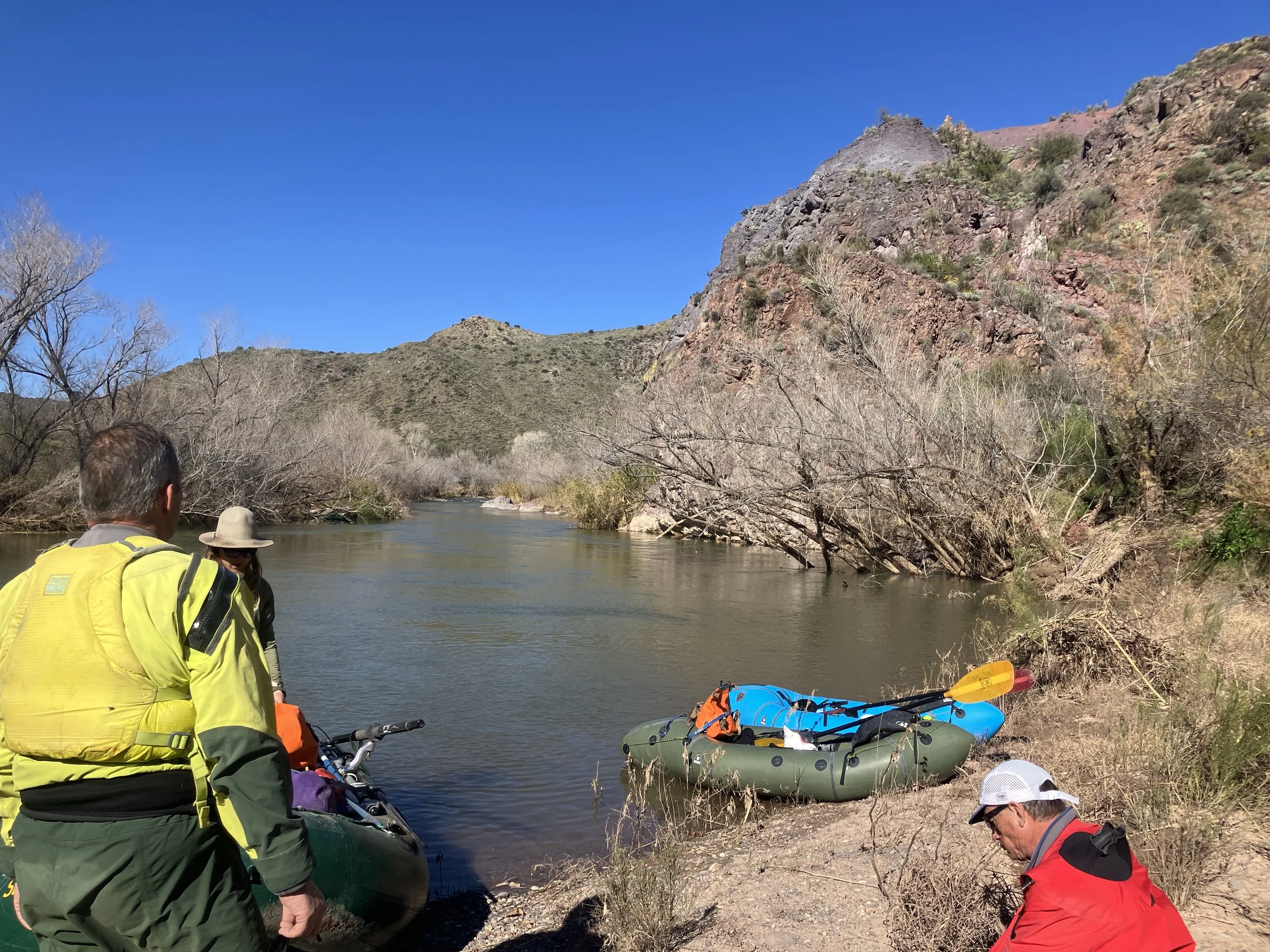
Day 1, Lunch/break
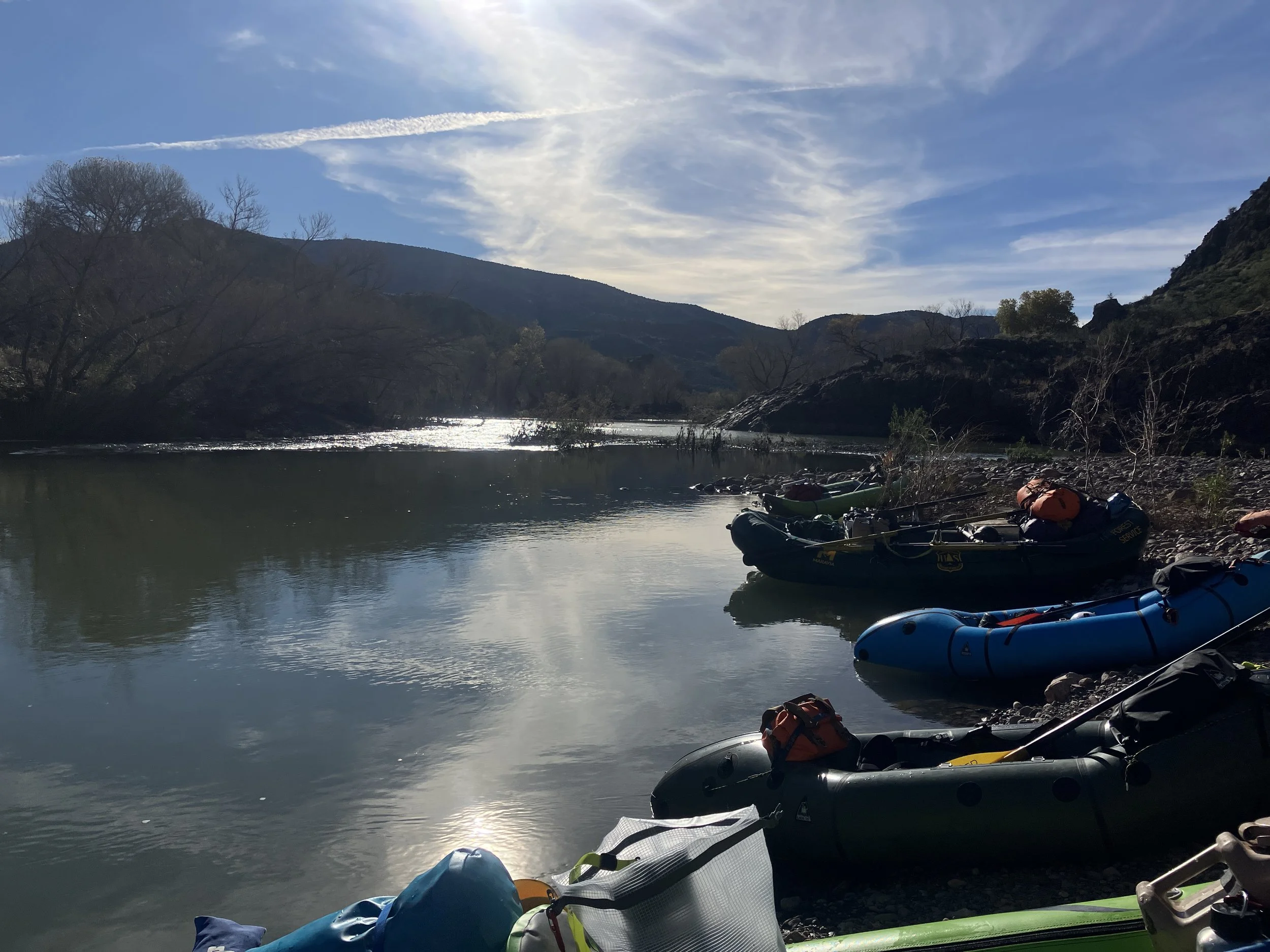
Day 2
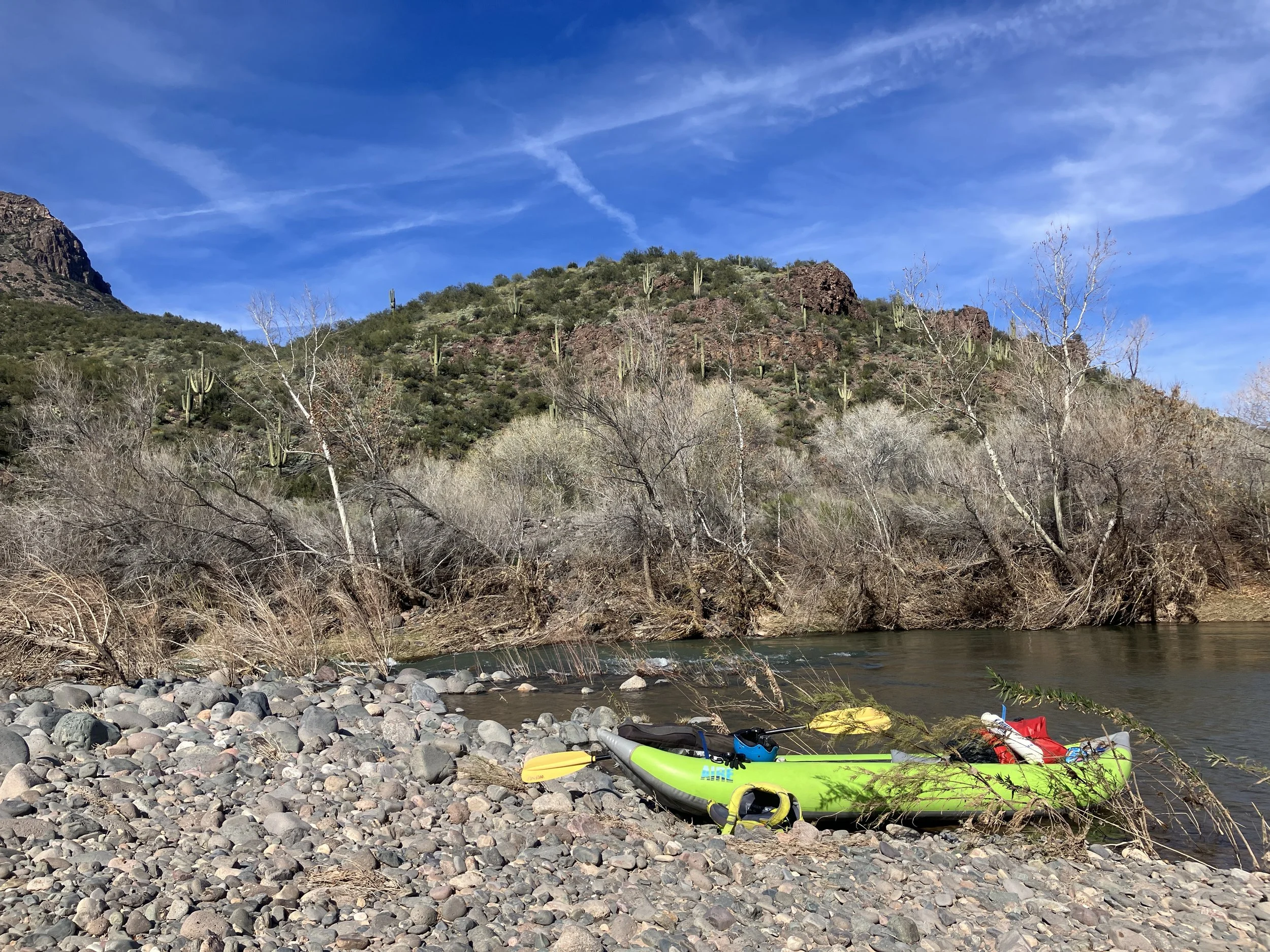
Day 2
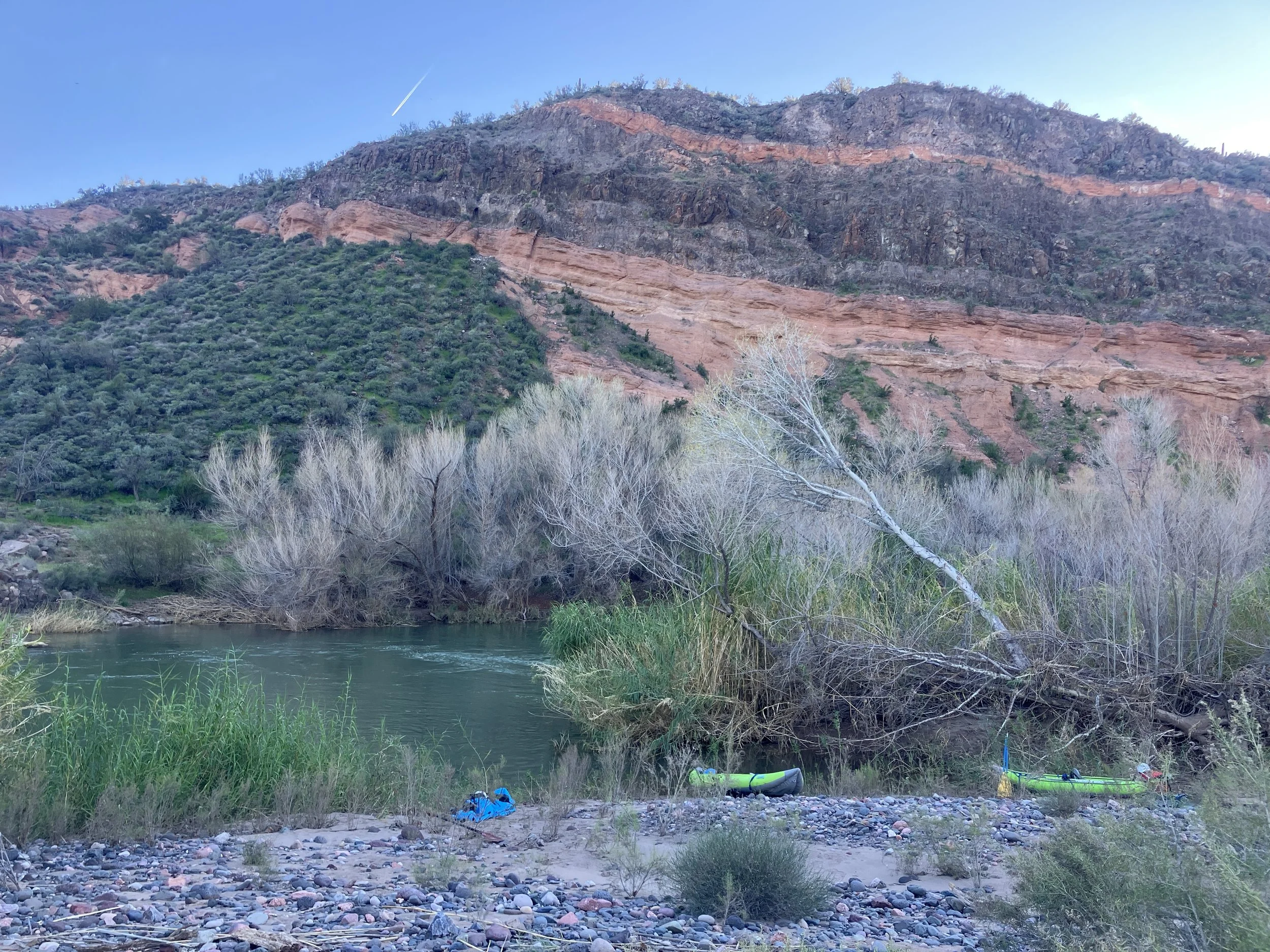
Day 2, Camp
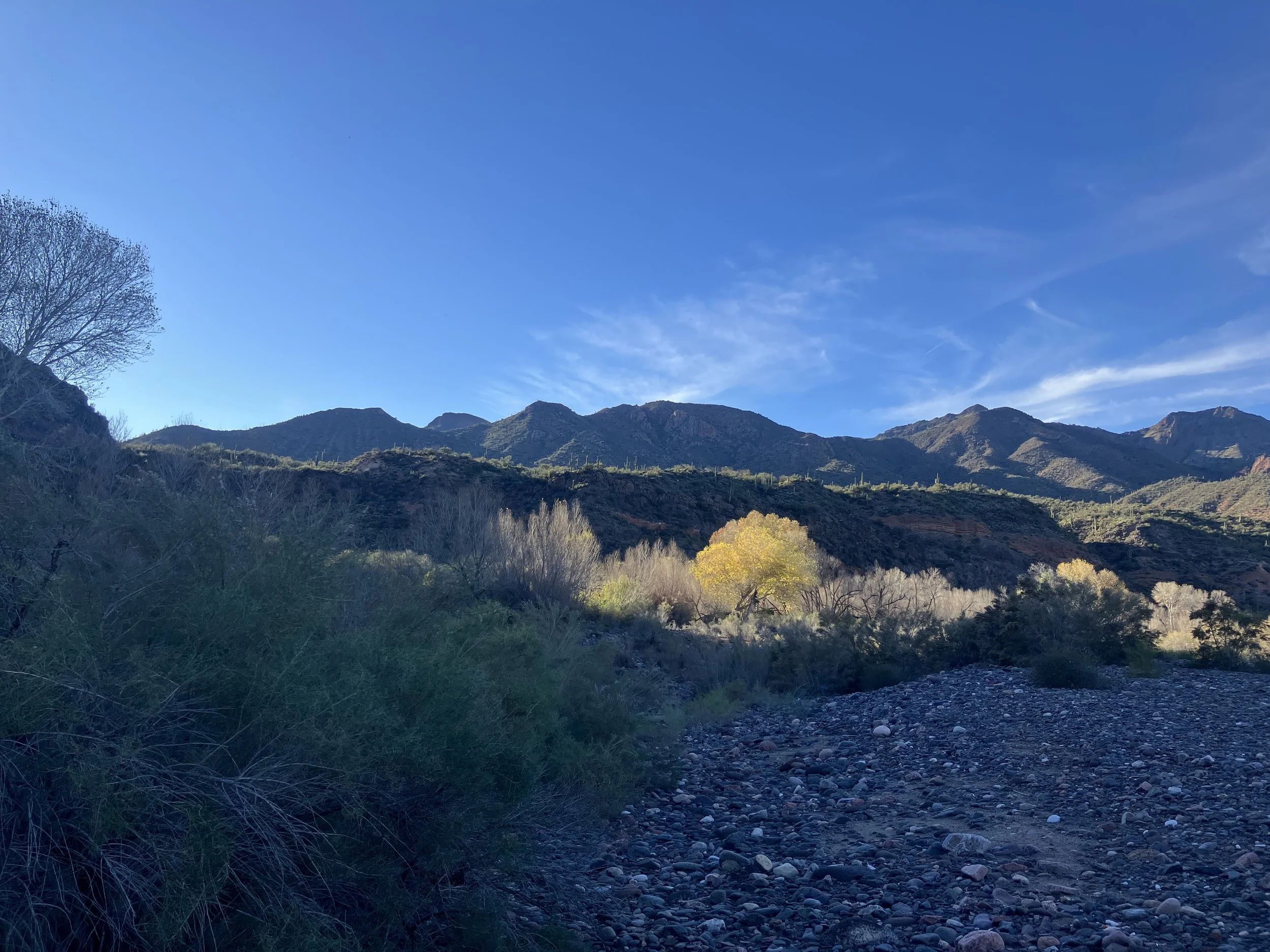
Day 2, Camp
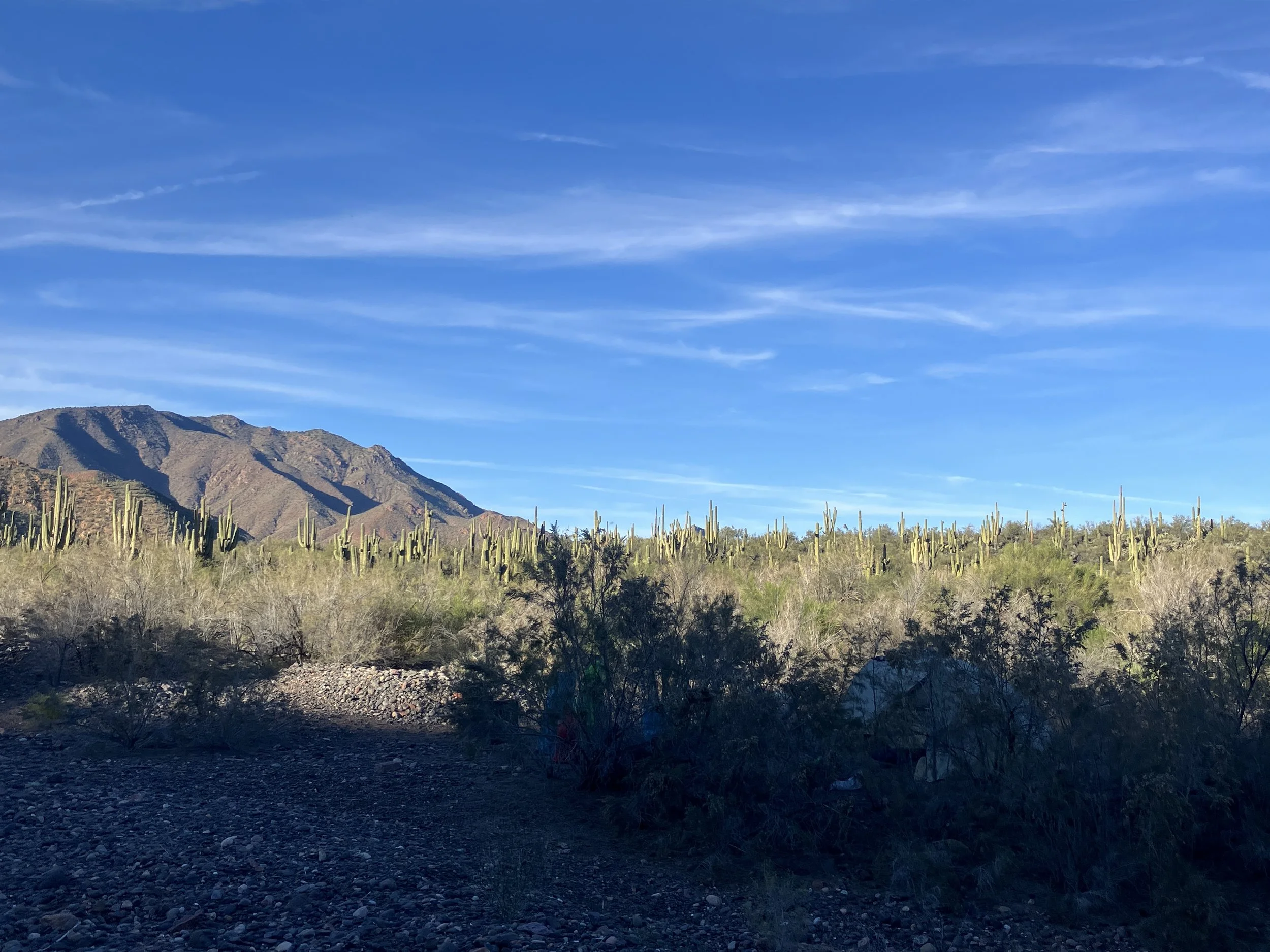
Day 2, Camp
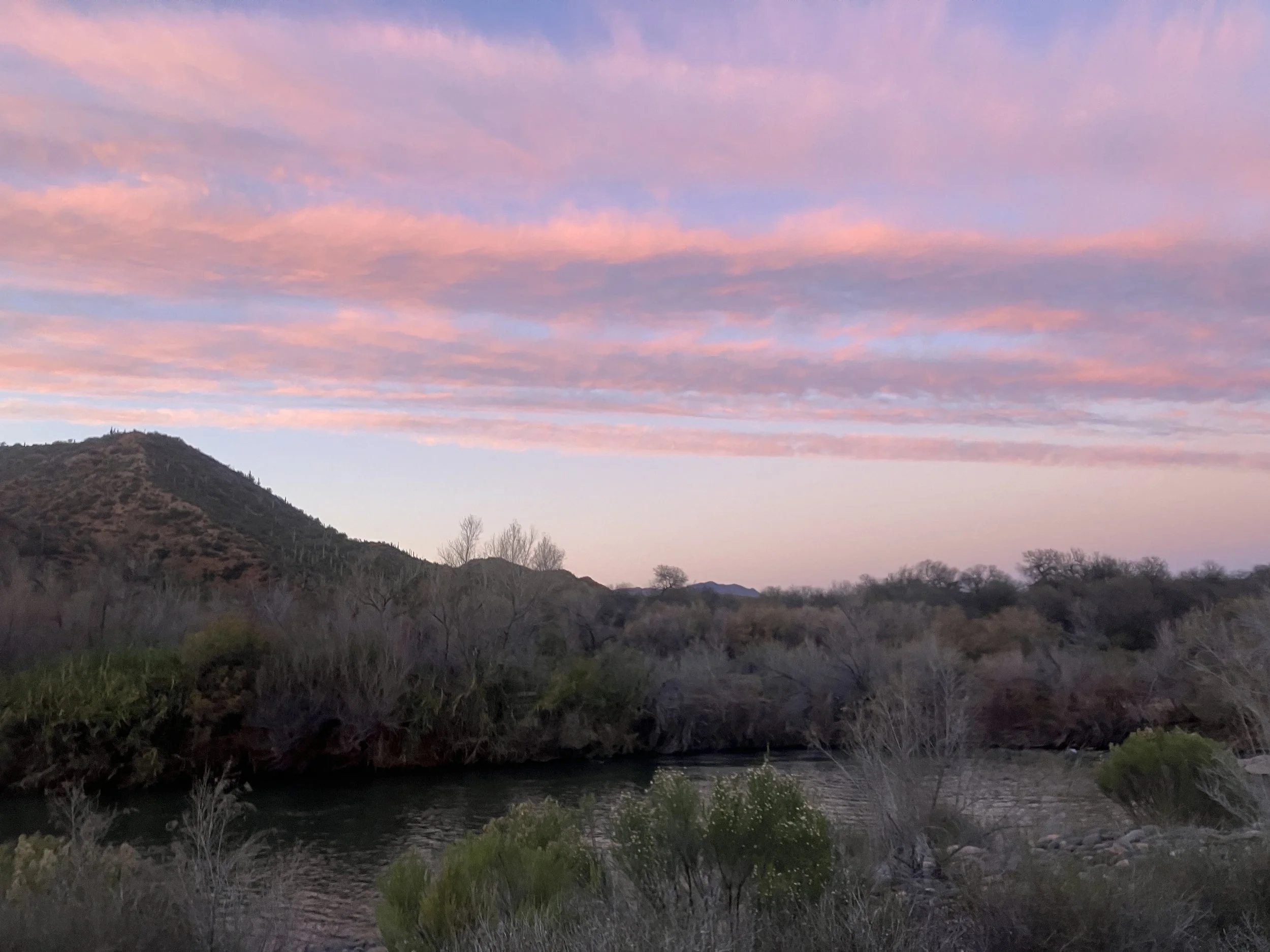
Day 3, Camp
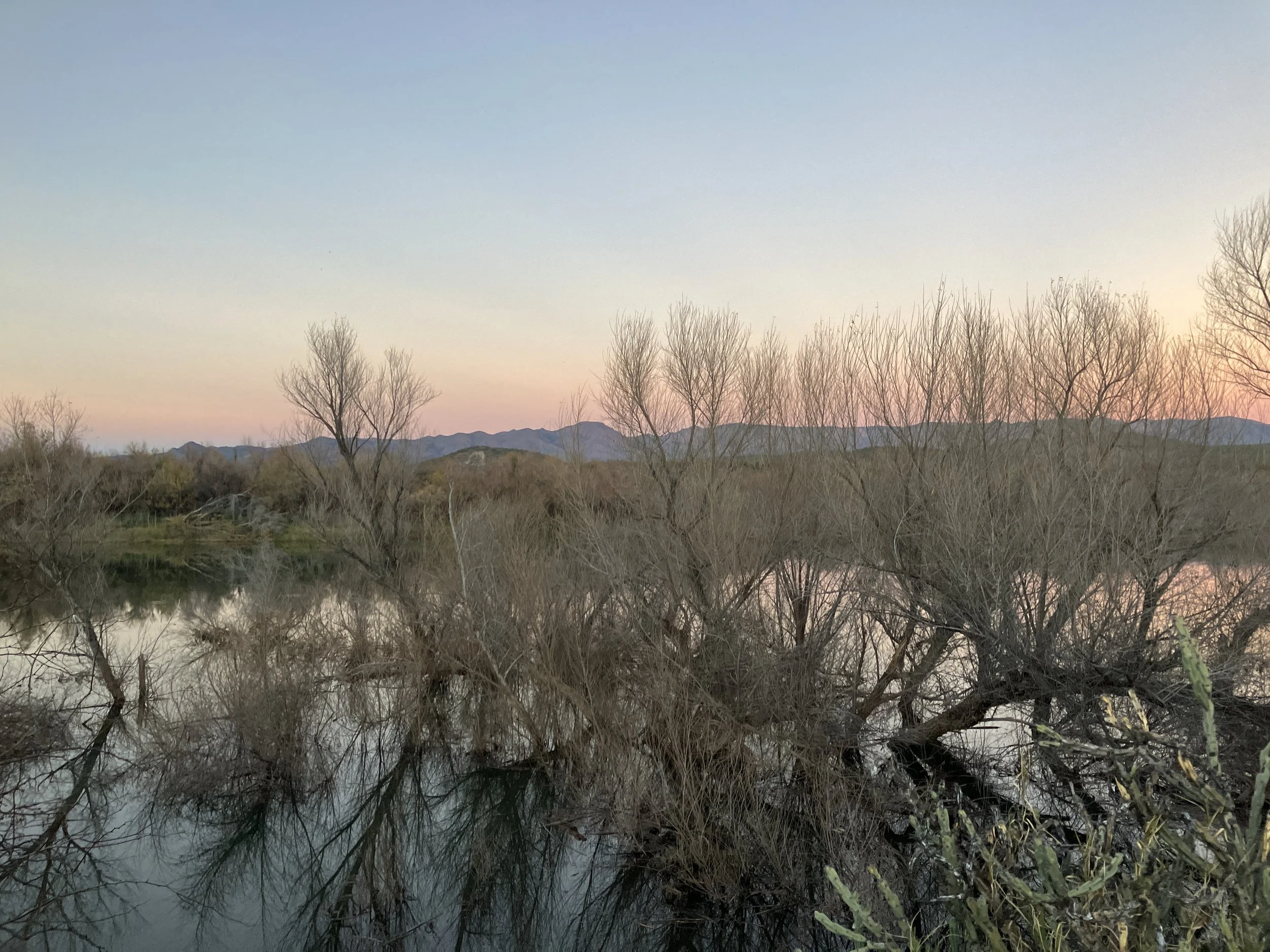
Day 4, Camp
Day 4, Camp
Day 4, Camp
COATIMUNDI!!! Photo from Todd.
Day 5, Loading up the trucks.
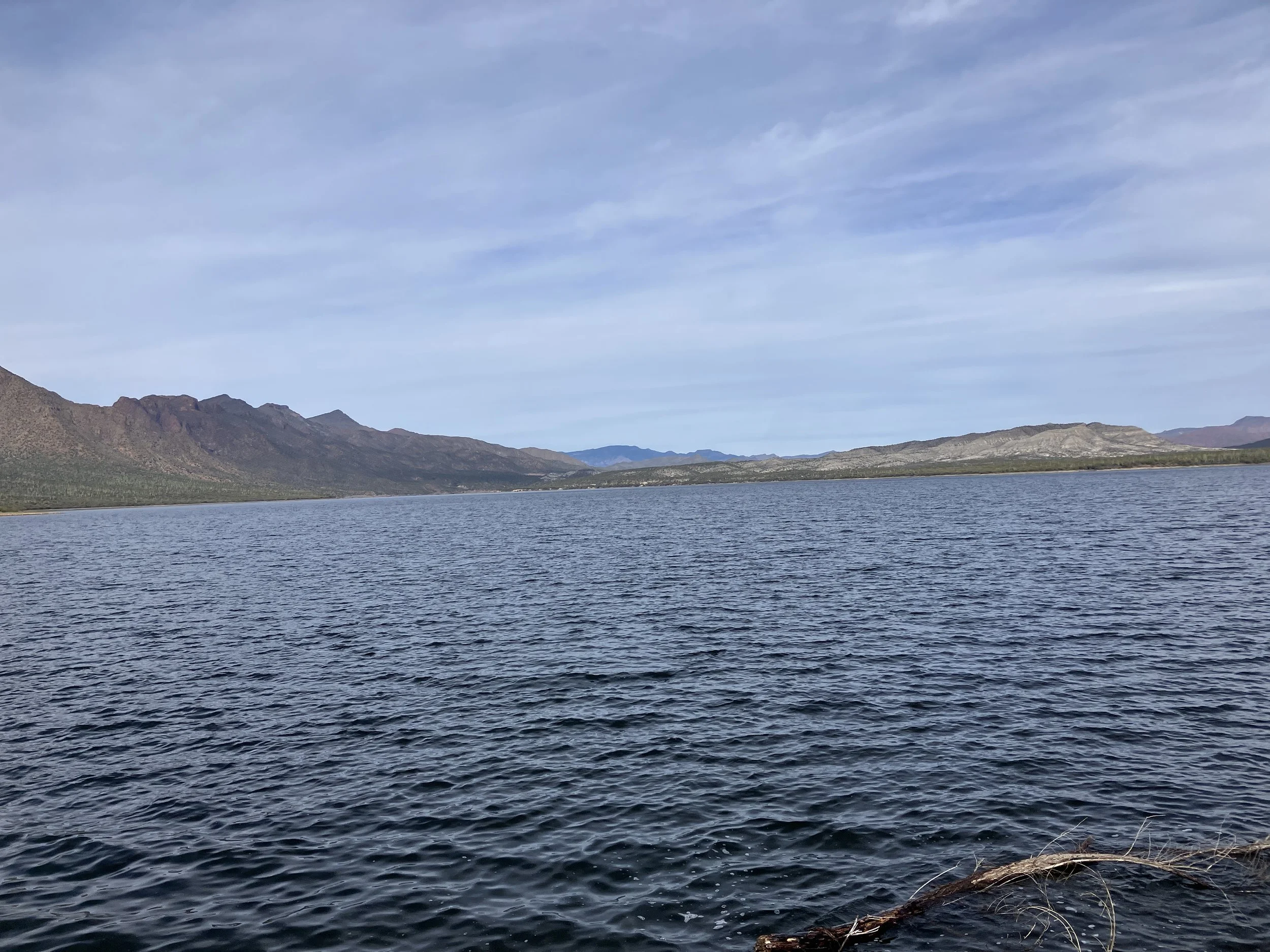
Day 5. View across Horseshoe.